📓Mastering Productivity with the PARA Method

How the PARA Method Changed the Way I Work
In my quest for better productivity, the PARA method has been a game changer. Developed by Tiago Forte, it helps you organize and streamline information effectively. The basic idea is simple: your brain is for having ideas, not storing them. That’s where PARA comes in.
What Are the Core Components of PARA?
PARA breaks everything into four categories:
- Projects: Active tasks with clear goals and deadlines—like launching a new feature for your work team or planning a trip.
- Areas: Ongoing responsibilities without a set end date—such as maintaining your health, relationships, or keeping a blog updated.
- Resources: Useful information that might come in handy later—reference articles, tutorials, or inspiration.
- Archives: Completed projects which can still be brought up later.
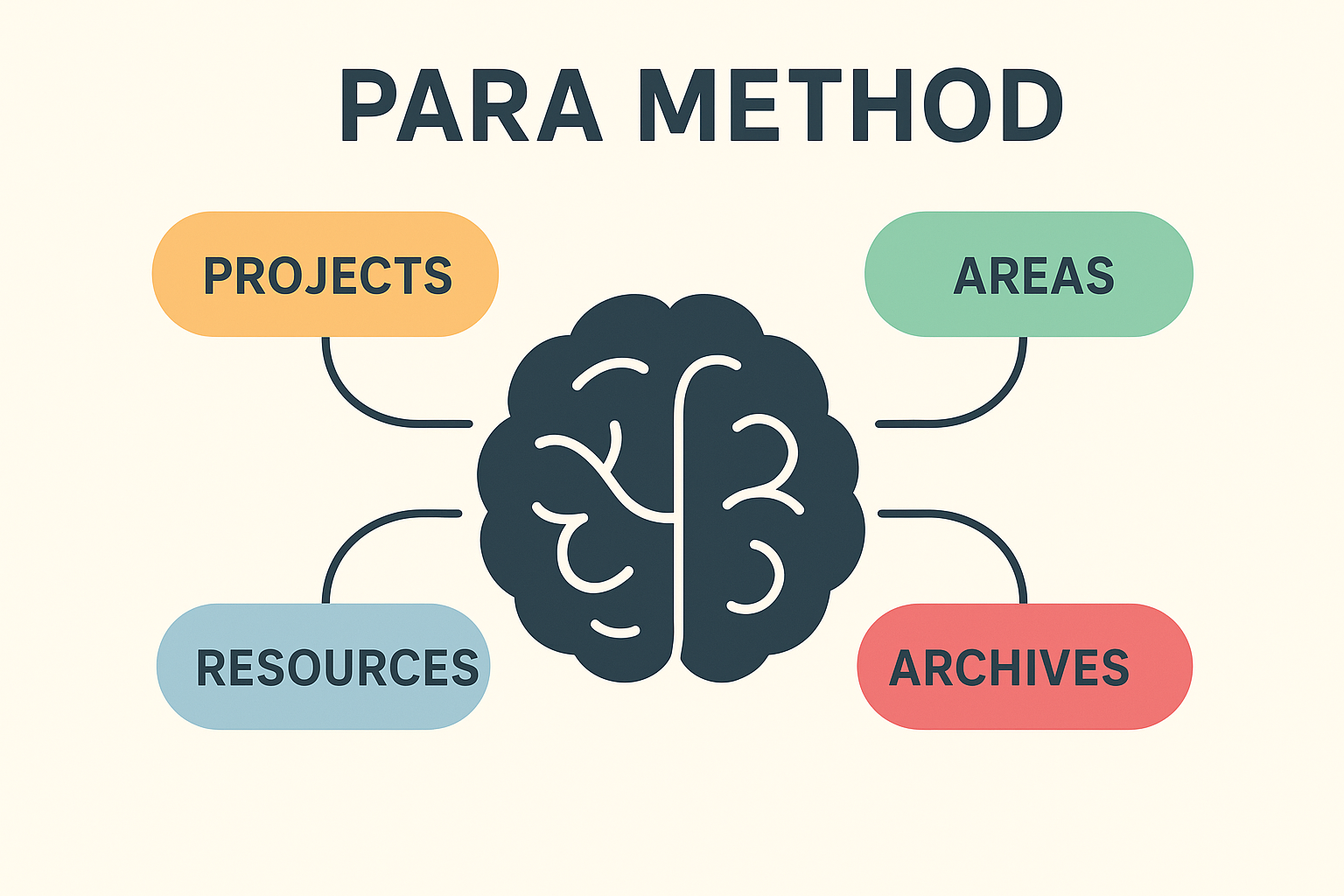
Basically, anything valuable you come across can be sorted into one of these four buckets.
I mentioned the second brain, but what is that?
How Does a Second Brain Boost Productivity?
The second brain is almost like a digital file storage system. Instead of trying to remember where you found something or where you stored something in a complicated folder structure, the beauty of PARA is that it takes out the guesswork. You always know where information lives. No more saving things “somewhere” and forgetting why or where.
Buckets for Projects, Areas, Resources, and Archives create clarity. They help you stop endlessly worrying about organization and start thinking about taking action.
The Psychological Benefits
Beyond efficiency, having a second brain is surprisingly freeing. There’s peace in knowing everything has a home. It does make logical sense as well. Any piece of information hits one of these four layers. The less relevant it is the more it moves down the list. From an action project to something that’s in your archive which you won’t revisit now but maybe you will one day, it does make sense conceptually,
You’re not constantly juggling information in your head, which reduces stress and frees mental energy for what actually is important to you.
How PARA Transformed My Workflow
Before PARA, I wasted time hunting through disorganized folders and notes. Now, everything has a reliable place, and it stays there until I need it. No more constant reorganization, there’s now a rhyme and reason to where information is located.
Whether you’re job hunting, working on a resume, or just managing personal projects, PARA keeps it all streamlined. It’s like having a second brain doing the heavy lifting, letting you focus on the creative or critical work that matters most.
PARA in Practice
I use Ulysses, Obsidian, and Ghost to implement PARA across projects and resources. But PARA works anywhere you can categorize and retrieve information reliably—from apps to cloud folders.
Common Challenges (and How to Fix Them)
Deciding where information belongs is usually the trickiest part. A simple rule:
- Actionable with a deadline → Project
- Ongoing responsibility → Area
- Reference → Resource
- Completed → Archive
Tip: Don’t overthink it. The goal is less mental load, not more complexity. Stick with it, review periodically, and the system naturally becomes frictionless.
Take it slow, it doesn’t have to be perfect.
It did take me a bit just to get myself calibrated to this way of thinking. But now that I use Para, whether it’s maybe pattern recognition, I’m applying it to all aspects of my life.
Maintaining Your Second Brain
Regular reviews are key. Update Projects, archive completed items, and keep Resources layered and qualified so you know their purpose when you return. A brief weekly review keeps your second brain sharp, reliable, and stress-free.
Common issues I’ve seen include, people getting confused between areas and resources.
Areas: Ongoing responsibilities without a set end date—like maintaining your health, managing finances, or keeping a blog updated.
Resources: Useful information that might come in handy later—reference articles, tutorials, or inspiration.
Give yourself enough time to allow it to sink in, it took about a week for me to wrap my head around the concept.
I’d allow yourself the same amount of time.
Why PARA Works
Many productivity enthusiasts and knowledge workers use PARA to manage everything from career tasks to personal hobbies. The result? Less stress, faster retrieval of important info, and a smoother workflow. For me, it’s been a great system—and it can be for you too.
Final Thoughts
The PARA method isn’t just a system—it’s a way to reclaim mental space in a world full of information overload. By giving every idea and every piece of information a clear home, you can finally focus on what matters, not where it’s buried. Now everything I learn is earmarked, it has a place in my second brain.
It’s helped me stop spinning my wheels and start making progress, whether for work, personal projects, or creative ideas. Give it a try—you might just find that your “second brain” becomes your new favorite productivity tool. For anyone curious to explore the method further, I found listening to Tiago Forte explain it on Audible really helped clarify how to make PARA work in real life.